
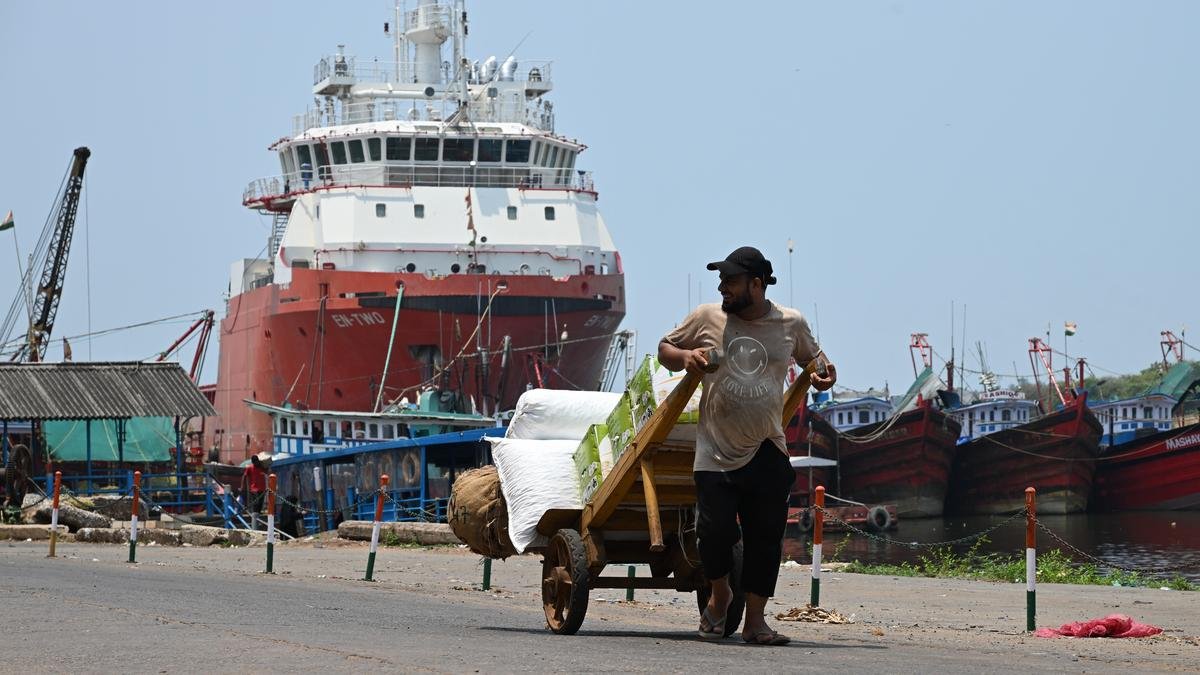
The report also warns that the scope for adaptation is rapidly shrinking as India’s administrative regions are expected to reach the 1.5°C warming limit in the near future. | Photo Courtesy: HS Manjunath
Nearly 40 coastal districts of India, including Dakshina Kannada, Uttara Kannada and Udupi, are likely to see summer temperatures rise by more than 1 degree Celsius by 2040, according to the new “Indian Coastal Region: Climate Projections 2021-2040” report released by Azim Premji University, Bengaluru.
According to the report, India’s average temperature is projected to rise by 1.5 degrees Celsius, and the country’s coastal regions are facing an impending climate crisis that will reshape lives, livelihoods and ecosystems in the next few years.
The report also warns that the scope for adaptation is rapidly shrinking as India’s administrative regions are expected to reach the 1.5°C warming limit in the near future.
Impact on the state’s coast
Summer maximum temperatures and summer wet-bulb temperatures over Dakshina Kannada and Udupi are projected to increase by 1.1 °C, with a continued warming trend expected.
Uttara Kannada is projected to see the highest increase of 1.2 °C in winter minimum temperatures, followed by 1.1 °C in summer wet-bulb temperatures. Annual maximum and winter minimum temperatures are also set to increase by 1 °C from their respective baselines in Dakshina Kannada and Udupi and by 0.9 °C and 0.8 °C in Uttara Kannada, respectively.
hotter and wetter
The report said the rainfall data under-estimates the intensity of both monsoon seasons in these districts.
In Dakshina Kannada, the southwest monsoon is expected to increase by 7% from the 1,983 mm baseline, and the northeast monsoon is expected to increase by 6% from the 243 mm baseline.
Udupi receives the highest rainfall among the coastal districts of India during the southwest monsoon. Starting from a huge baseline of 2,055 mm, it is estimated to grow by 6%.
Northeast monsoon in the district is expected to increase by 10% from the baseline of 219 mm.
The trend of rainfall is also increasing in Uttara Kannada. The southwest monsoon is expected to increase by 8% from the 1,539 mm baseline, and the northeast monsoon is expected to increase by 13% from the 167 mm baseline.
Other highlights
The report aims to provide local authorities with the basic data they need to build district-level resilience. Other key findings of the report include dangerous summer wet-bulb temperatures in coastal Kerala and Tamil Nadu, which are close to the level of 31 degrees Celsius considered dangerous for humans.
Coastal Maharashtra and Gujarat will receive fairly heavy rainfall and suburban Mumbai is likely to receive heavy rainfall for about a week.
Rapid increases in sea surface temperatures (0.27°C per decade) are increasing the likelihood of intense tropical cyclones.
impending crisis
Anurag Behar, CEO of Azim Premji Foundation, said, “Climate change is not a distant future challenge – it is today’s reality, and 2040 is just 14 years away.” “This dataset brings home the impacts of climate change with great urgency, and highlights how we must restructure our infrastructure and governance to collectively tackle this crisis.”
Harini Nagendra, director of Azim Premji University’s School of Climate Change and Sustainability, said the findings highlight the urgent and hyper-local nature of the crisis for the Indian coastline.
“Be it heat stress in Ernakulam or rising salinity in the Sundarbans, our vulnerabilities are visible in all aspects of our daily lives. We have a small window of time to move from reactive mitigation to proactive adaptation – we need to create a future that acknowledges the ecological challenges facing our country,” he said.
published – May 29, 2026 07:48 PM IST