
A new study in the field of space medicine highlights several important contributions of physicians working to advance space exploration, highlighting the unique strengths they bring to the field.
Dr. Farhan M Asrar, a Canadian physician and internationally renowned space medicine researcher, has worked with experts and astronauts from space agencies around the world. He looks at human health in space, including deep space missions, as well as how space technology can be used to renew health, public health, and the environment on Earth.
One of his most recent research, ‘From bedside to orbit: the lasting impact of physician-astronauts across six decades of space exploration’, published In Journal of the Royal Society of MedicineLooks at the role of the medical doctor in advancing space exploration.
According to Dr. Asrar, this work addresses two historical milestones: it has been 61 years since the first physician-astronaut – a medical doctor who became an astronaut – went into space for Russia, as well as 60 years since NASA first selected physicians as astronauts. Since then, dozens of physician astronauts have become astronauts around the world.
This publication highlights how the skills of physicians naturally match the demands of astronauts. It also presents the world’s first comprehensive database of physician-astronauts, listing all physician-astronauts past and present from around the world.
talking to dawnAsrar discussed his research and provided information about its importance as a publication, as well as the intersection between practitioners and space research.
Doctors, astronauts, and how their skills collide
While many countries’ astronaut programs focus their attention on people from the armed forces – including the first astronauts of Russia and the United States – they have since seen the importance of bringing scientific and other professional expertise to the field of space and have opened up opportunities for others, according to Asrar. Other countries have also made open calls calling on citizens from various professional backgrounds to apply to become astronauts.
Asked where physicians fit into the equation, Asrar said, “Physicians are attracted to space for the same reason they practice medicine: to push boundaries, solve problems, and be prepared for the unexpected.
“Physicians make adaptable astronauts because medicine trains them to think scientifically, lead under pressure, and manage uncertainty, which is exactly what space flight demands.”
Additionally, as the publication suggests, they may be beneficial to space missions due to their scientific and research experience. His medical training is also an asset.
“Astronaut selection is renowned for testing cognitive, physical, operational, and psychological flexibility,” the study explains.
“Practitioners are trained to excel in environments of uncertainty, complexity, and high risk, making these skills directly applicable to space missions.”
It further states, “For many physicians, the allure lies in the ultimate challenge of pushing the limits of human physiology and endurance in extreme environments…The passion for space is often nurtured by a lifelong fascination with science, engineering, and the unknown. For physicians, these factors can extend to the boundaries of medical research and technological innovation.”
Asrar’s own research explores how space technology can benefit health, public health, and the environment on Earth, as well as the health of humans in space and the provision of medical care in space.
“Being a practicing physician has helped me integrate the fields of space and health,” he said. dawn. “Since the focus of space travel is on deep space missions, this work was inspired by looking at how medical experts can support long-duration space exploration.”
why studies matter
Asrar said the new study “highlights the high speed and high stakes involved in both the space sector’s connections to, and similarities with, the medical world”.
He said it also aims to show the medical and health sector what space is available for the sector.
The publication also highlights the significant accomplishments of physician-astronauts, including their extraordinary records: “This study honors them and their achievements with the first repository of documentation of all physician-astronauts from around the world.”
For example, the current world records for longest solo space flight in space are held by an American, a Canadian, a Russian and a physician, Asrar said. The medical doctor is also the record holder for most extra-vehicular activity (EVA) – or spacewalk – in a single mission by a NASA astronaut and a Canadian astronaut.
Asrar said the only astronaut to fly on all five of NASA’s space shuttles was also a doctor. Additionally, the world’s first paraastronaut (astronaut with a physical disability) was recently selected by the European Space Agency: Dr. John McFaul of the United Kingdom, a medical doctor.
“Our publication again seeks to highlight the key roles of the medical and health sector in space exploration and consider exploring opportunities in the space sector. Additionally, it is also highlighting the important roles being played by doctors in the space sector, so when countries including Pakistan are expanding their astronaut programme, they are considering opening it up to physicians as history and research has shown that they have and can play an important role.”
He said the next step is to consider future space missions that would involve going deeper into space and how physicians might play a role in those.
a follow up research publication In The Lancet Takes Asrar’s original research one step further, looking at how physician-astronauts could play a vital role for deep space missions.
Asrar’s research also symbolizes the great achievements of women, and especially female practitioners, in space and STEM fields.
Interestingly, he said, the first female astronauts from Europe, France, Canada, Japan, Asia and Austria, and the first female astronaut of color in space are all physicians.
“Even Saudi Arabia’s second female astronaut is a medical doctor,” he said.
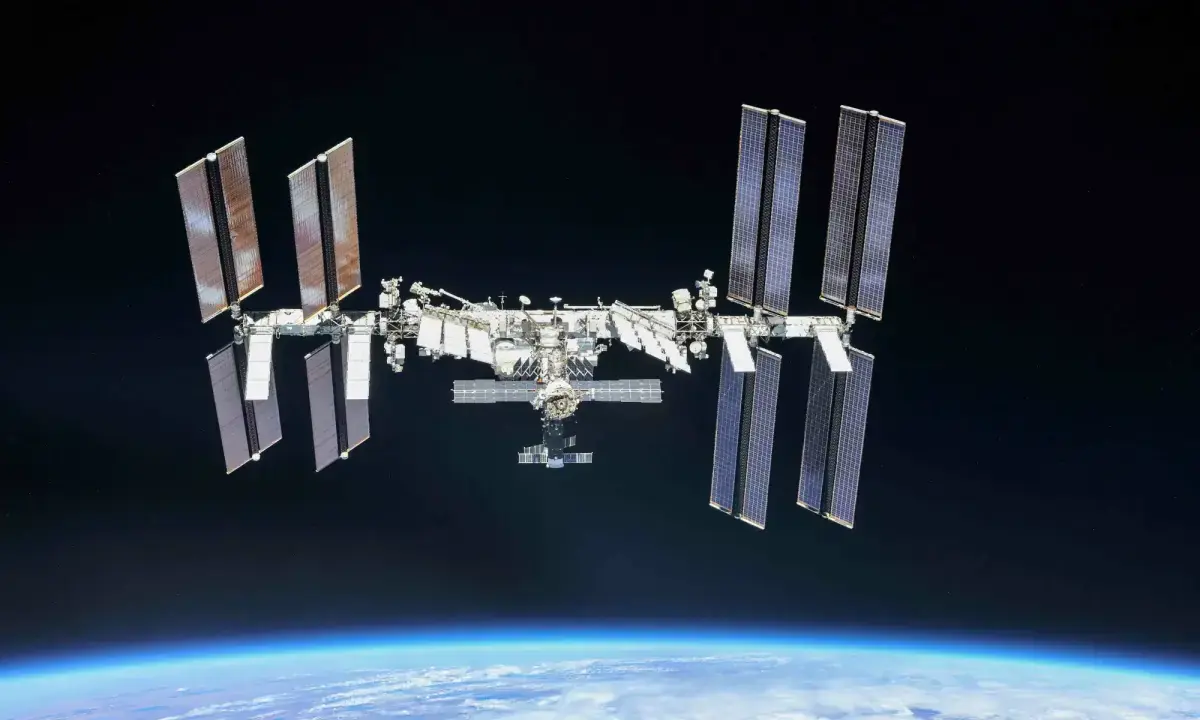
This research is also highly international and multi-ethnic; This is by design. Many countries work together in many space initiatives, such as the International Space Station (ISS). Even Pakistan’s upcoming astronaut mission involves working closely with China, Asrar said.
“It is clear that space brings us all together,” Asrar said, adding that as the project leader and lead author, he wanted to highlight the shared experiences of astronauts around the world by bringing together an international group.
This is the first publication with so many astronaut co-authors (six), including the unique aspect of all of them being physician-astronauts.
Asrar has significant experience working with professionals, experts, astronauts and learners from more than 30 countries. Co-authors of the study include astronauts from NASA as well as the European Space Agency, the Canadian Space Agency, the Japanese Space Agency (JAXA) and the Saudi Space Agency.
“I would tell doctors and health professionals that their skills are very important,” Asrar said. dawn When asked if he had any message for those interested in this field.
He encouraged medical and health professionals to seek opportunities in the space field: “Even though opportunities to become an astronaut may be limited right now, there are many research and clinical aerospace medicine opportunities one can still explore.”
The doctor also called on space agencies’ decision makers and astronaut selection committees to “look at the beneficial role already played by physician-astronauts and … expand their selection pool to consider medical doctors in the future.”