
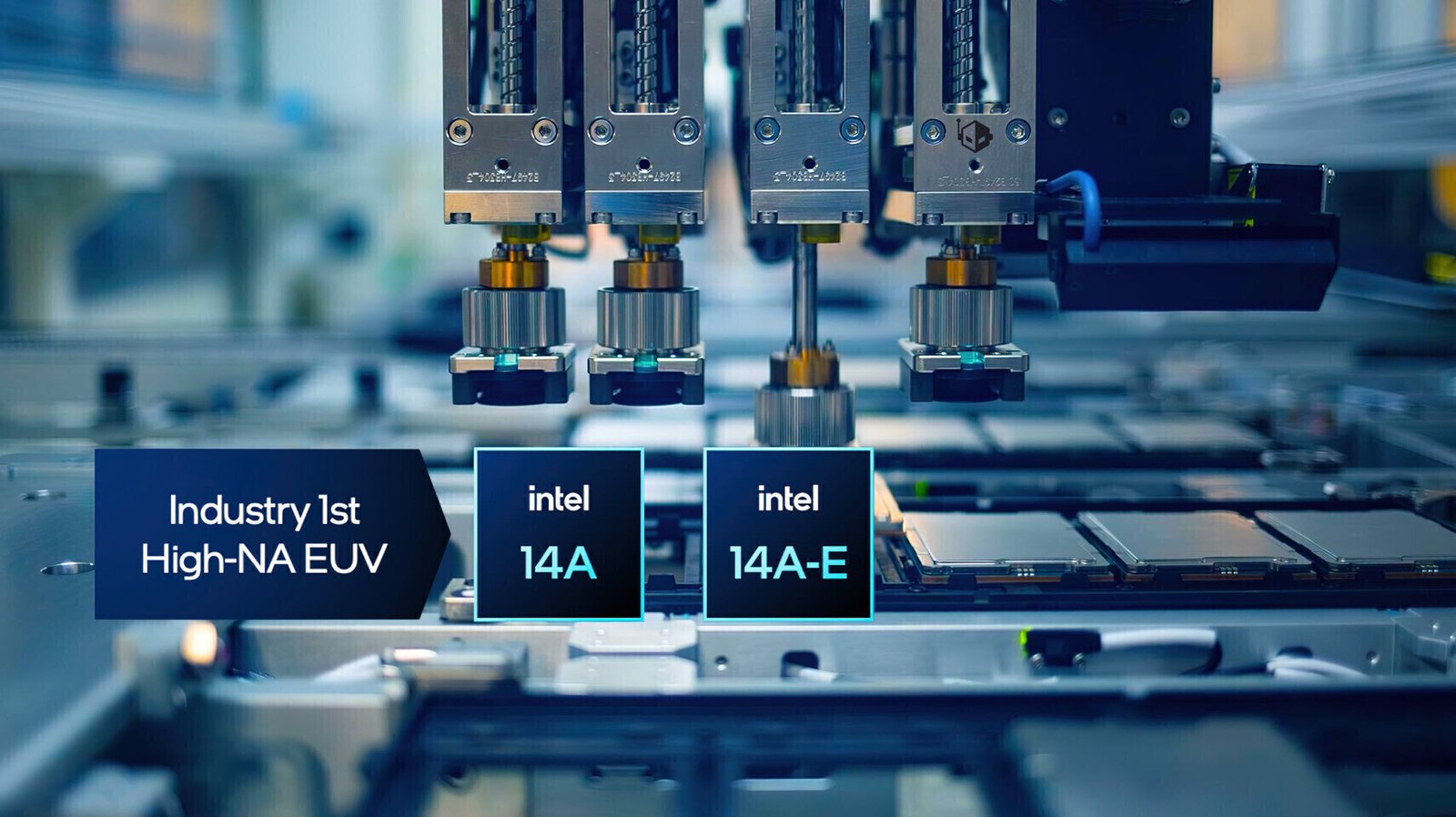
Companies regularly evaluate leading industry nodes, but often choose TSMC’s manufacturing because of its reliability, high volume capacity, and advanced packaging, which has led to many high-performance and low-power designs being mass-produced. However, Intel Foundry is investing significant resources and logistics to attract external customers, leading UBS to expect several foundry commitments to be announced this fall. Late last year, we learned that Apple was waiting for Intel to release 18A-P PDK version 1.0 or 1.1, scheduled for Q1 and Q2 of 2026, respectively. Since we’re now in Q2, we’re waiting for further confirmation to see if Apple moved forward on the deal, but UBS expects it did.
Another significant opportunity for Intel Foundry lies not only in its silicon manufacturing but also in its advanced packaging technologies. Companies can design 2D, 2.5D and 3D building blocks with silicon using Intel’s EMIB, EMIB-T and EMIB-M variants, which can stack multiple chiplets and combine multiple HBM memory modules into a single package. Intel has also demonstrated the use of 47 tiles in a single package and envisions a multi-kilowatt solution per package. Meanwhile, TSMC’s leading packaging technology, CoWoS, is reportedly struggling with the four reticle size dies, causing some production issues for NVIDIA.