
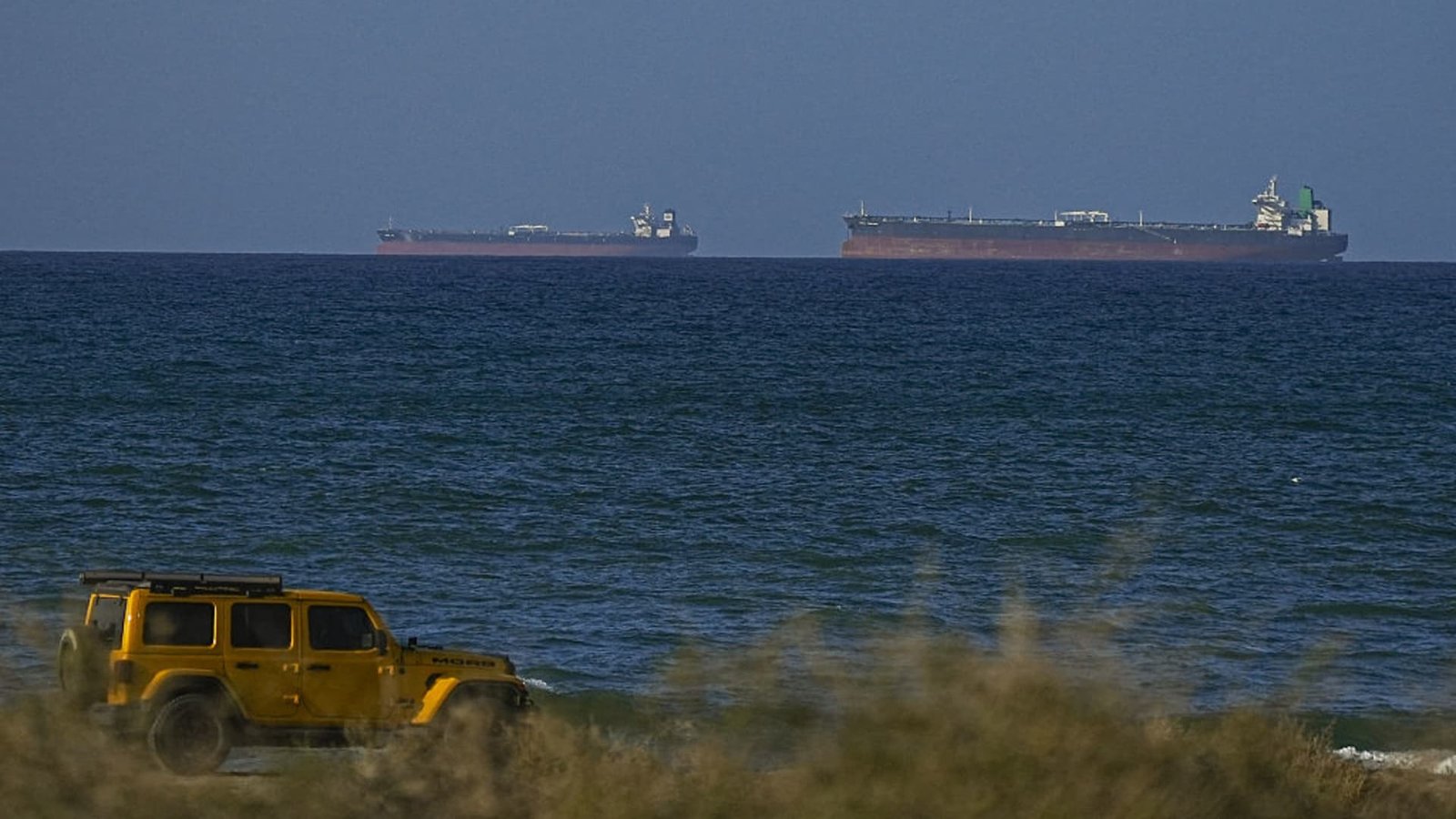
The spot price of Brent crude oil fell to $124.68 a barrel on Wednesday, in a sign that the Iran ceasefire deal is unlikely to resolve the deep supply disruptions caused by the five-week war.
Unlike futures contracts for delivery in June and beyond, the spot price controls Brent oil for delivery in the next 10 to 30 days.
The spot price fell to $19.75 after a two-week ceasefire agreement between the US and Iran, according to S&P Global, which tracks data.
But that’s still about $30 above the Brent June futures contract, which closed at $94.75 on Wednesday. The high prices of actual cargoes indicate that oil supplies will remain tight for some time even if the ceasefire agreement holds.
Amrita Sen, founder of Energy Aspects, said the spot price of actual cargo reflects the reality on land and in the deep sea. Middle East oil producers have halted production of 13 million barrels per day as tanker traffic through the Strait of Hormuz has reduced, Sen said.
Sen said most tankers are now turning to the US to pick up oil. He said it could take until June to send those ships back to the Middle East.
“It’s a complete mess,” Sen told CNBC’s “The Exchange” on Wednesday.
Millions of barrels of oil have been removed from the market because of the war, said Amina Bakr, Middle East and OPEC expert at Kpler. Bakr told CNBC that it could take up to five months to restore capacity.
“It depends on how long this ceasefire lasts” and whether it leads to a peace deal, Bakr said on CNBC’s “Morning Call” on Wednesday.
The CEO of Kuwait Petroleum Corporation said in March that it would take four months for Gulf Arab producers to fully restore their output to pre-war levels. Before the war Kuwait was producing about 2.6 million barrels per day, the fifth largest producer in OPEC.
“We have flexible reserves that bring up considerable production immediately – within a few days,” Sheikh Nawaf Al-Sabah told the oil industry at the CERAWeek by S&P Global Energy conference in Houston on March 24. “The bulk of it will come within a few weeks, and then full production will come within three or four months.”